Wednesday, June 14, 2017
Compact linac designed for proton therapy
A design for a compact, fully linear accelerator for proton therapy has been developed by researchers at CERN. The linear design offers a higher beam quality than circular medical accelerators but – thanks to its high accelerating gradient – has a similar footprint (Phys. Rev. Accel. Beams 20 040101).
The TULIP all-linac design
Hadron therapy uses beams of high-energy particles, such as protons, to kill off tumours. Presently there are two types of particle accelerator used for hadron treatments: cyclotrons and synchrotrons. Both are circular accelerators, with the former using a constant magnetic field and a spiral beam path, and the latter accelerating particles around a fixed, circular orbit that is maintained by increasing the strength of the magnetic field as the particles speed up within the machine.
Both accelerator types come with certain disadvantages. Cyclotrons have fixed beam-extraction energies, meaning that to target tumours at different depths within a patient's body, moveable absorbers must be placed in the beam's path to reduce its energy. The drawback of this, however, is that 99% of the beam energy is lost, the absorbers become activated, and beam scattering may generate secondary neutrons that can be hazardous for the patient. While synchrotrons do allow for the tuning of the output beam, adjustments take up to a whole second, making treatment times longer and more uncomfortable for patients.
Both of these issues might be overcome by using a linear accelerator instead. The key advantage of linacs over circular accelerators lies in how the energies of their output beams can be adjusted in mere milliseconds with no loss in beam intensity, allowing for quick treatments and no beam scattering. Beams are adjusted by varying the radiofrequency amplitude and phase of the linac's final accelerating structure. Linacs typically come with a major drawback, however: the large space usually required to accommodate them is difficult to find within hospital buildings.
A previous solution to this issue, developed by the TERA foundation, combined circular and linear accelerator structures into a so-called "cyclinac" concept. The design – the turning linac for proton therapy (TULIP) – presented a single-room facility enabled by having a commercial cyclotron on the floor, accelerating protons up to tens of MeV, which are then injected into a linac mounted on a rotating frame around the patient, which boosted the particles to 70–230 MeV, suitable for therapeutic use.
Cyclotrons and linacs are not entirely compatible, however, being designed for beams with inherently different time structures, resulting in beam losses, instabilities and emittance growth. In a new study, Stefano Benedetti – a physicist at CERN and EPFL – and colleagues present an all-linac twist on the original TULIP design that overcomes these issues, thereby providing a higher beam quality while offering the most compact all-linac proton therapy design to date.
"The idea is to have a linac-based proton therapy facility that is as compact as possible, so to have a product that fits, ideally, into already existing hospital buildings, saving on infrastructural costs," says Benedetti. This is achieved thanks to the collaboration between TERA and CERN, which has led to the development of new accelerating structures that can support higher electric fields, and resulting accelerating gradients, without risk of electrical breakdown. The TULIP all-linac design has a footprint of only 9 × 22 m, which would make it comparable with existing single-treatment beam cyclotrons and synchrotrons.
The TULIP all-linac would be capable of delivering protons penetrating up to 33 cm into a patient's tissues, which would be comparable with other solutions. At the same time, the design results in particle losses being concentrated at energies below 5 MeV, reducing the shielding requirements in comparison with cyclotron facilities.
The researchers are presently testing a prototype of a single accelerating structure – with promising results – and moving to develop similar designs suitable for accelerating carbon ions, but Benedetti says he is unsure whether CERN will develop a full prototype of the TULIP all-linac design.
The proposed TULIP all-linac design "could stimulate new and innovative solutions for approaching the design of compact linear accelerators of protons," says Concetta Ronsivalle, a physicist from the Italian National Agency for New Technologies, Energy and Sustainable Economic Development, who was not involved in this study. Ronsivalle notes, however, that "such a delicate application as that of proton therapy will require a reduction of the complexity of the system in order to limit costs, and to increase reliability and operational simplicity."
Original Source: http://medicalphysicsweb.org/cws/article/research/69024
Original Date: Jun 8, 2017
Original Author: Ian Randall

Monday, June 12, 2017
TheraView TBI gets 510k approval
TheraView and its Distributor Acceletronics are proud to present the first commercially available mobile Total Body Irradiation (TBI) detector. With its unique software features, radiation therapists can easily follow the entire TBI treatment. An easy setup on any Linac makes the patient treatment very efficient and accurate. During a live video stream the system will warn the user of any patient deviation by a change in color scheme or clinical audio alarm.
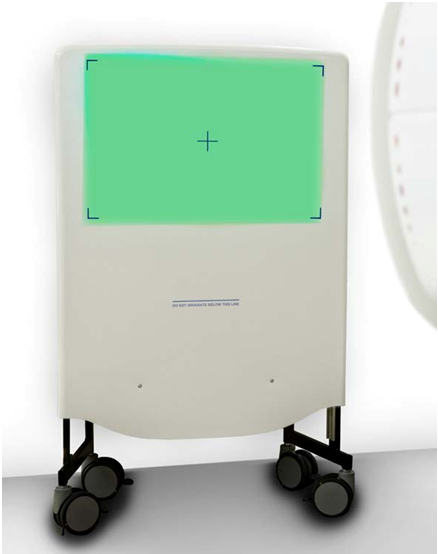 Please take a moment to visit our website TheraView page which has a link to the new TBI Imaging system brochure.
We are available for an onsite or online demo at a convenient time to share this new product with you and your team.
Contact us at info@Acceletronics.com or call 800-543-5144.
Please take a moment to visit our website TheraView page which has a link to the new TBI Imaging system brochure.
We are available for an onsite or online demo at a convenient time to share this new product with you and your team.
Contact us at info@Acceletronics.com or call 800-543-5144.
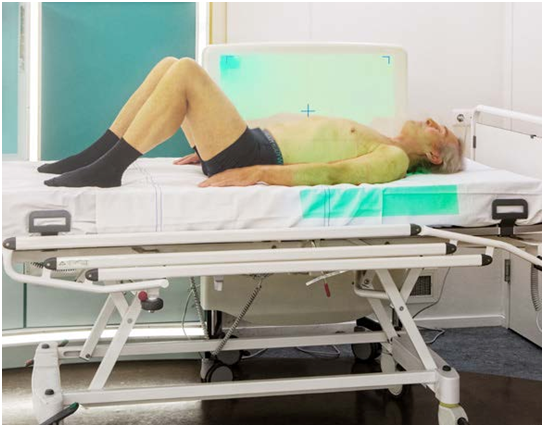
Please take a moment to visit our website TheraView page which has a link to the new TBI Imaging system brochure.
We are available for an onsite or online demo at a convenient time to share this new product with you and your team.
Contact us at info@Acceletronics.com or call 800-543-5144.
Toll Free 1-800-626-8704 www.acceletronics.com
Tuesday, June 6, 2017
How Do Medical Linear Accelerators Work In The Treatment Of Cancer?
Linear accelerator offer many different medical uses. For example, the radiation put out by linear accelerators
can crush the denial of an organ transplant; overpower the immune
systems of patient’s blood, in essence the transplant, and correct
positive neurological & cardiovascular illnesses.
The medical linear accelerator is a vivid case of what can be accomplished when scholars from different academic disciplines join to solve a problem. This 50-year-old accomplishment was a sign to the multidisciplinary method now named as the translational medicine. According to the doctors, the linear accelerator is considered to be the most important cases of translational study that has happened globally. Oncology radiation equipment’s only focus on the intense X-rays for destroying a tumor without any sort of harm.
Key advantages of the linear accelerator include:
Radiation treatment is a critical instrument in the battle against tumor with two out of three individuals with growth experiencing some type of radiation treatment as a major aspect of their treatment. Radiation treatment utilizes uncommon gear to send high-vitality particles or waves, for example, x-beams, gamma beams, electron bars or protons to pulverize malignancy cells. It is utilized overwhelmingly for the treatment of strong malignancies.
Radiation treatment can be given in two diverse courses – from outside the body (outer bar radiation treatment) or inside the body (inner radiation treatment - Brachytherapy). Outer radiation treatment normally includes utilizing a machine called a linear accelerator that coordinates high-vitality beams from outside the body into the tumor.
The main utilization of linear accelerator in drug goes back to the 1950s. TrueBeam direct quickening agent is one such propelled machine fit for conveying a wide range of radiation like Intensity Modulated Radiation (IMRT), Image guided radiation (IGRT), stereotactic radiosurgery (SRS), stereotactic body radiotherapy (SBRT). These strategies utilize non-obtrusive tumor-annihilating radiation to treat malignancies all through the body while restricting harm to close-by solid tissue.
TrueBeam linear accelerator utilizes leveling channel free (FFF) photon pillars to wreck disease cells. An additional favorable position of utilizing linear accelerators in FFF mode is the stamped increment in measurements rates, up to 1400 MU/min and 2400 MU/min and this shortens abbreviate general treatment delivery time.
The high measurements are communicated with exactness and precision, bringing about the disease cells losing their capacity to imitate and biting the dust. Another principle favorable position of utilizing TrueBeam direct quickening agent is that its imaging framework enables doctors to track the tumor during treatment, despite the tumors movement because of normal breathing.
Acceletronics is an independent service company dedicated to delivering the best equipment performance and service reliability from Linear Accelerators and CT Scanners across all major brands and models. Learn more about Acceletronics and their selection of new and refurbished linear accelerators and CT scanners today at http://www.acceletronics.com. To contact one of our Linac experts call 610.524.3300.
The medical linear accelerator is a vivid case of what can be accomplished when scholars from different academic disciplines join to solve a problem. This 50-year-old accomplishment was a sign to the multidisciplinary method now named as the translational medicine. According to the doctors, the linear accelerator is considered to be the most important cases of translational study that has happened globally. Oncology radiation equipment’s only focus on the intense X-rays for destroying a tumor without any sort of harm.
Key advantages of the linear accelerator include:
- Smaller treatment plans
- Speediness and accuracy
- Effortless treatment
- Nominal damage to close tissue.
- These equipment’s limits are normally used for one purpose only.
- Many devices and their related power supplies are compulsory, which expand the expense.
Radiation treatment is a critical instrument in the battle against tumor with two out of three individuals with growth experiencing some type of radiation treatment as a major aspect of their treatment. Radiation treatment utilizes uncommon gear to send high-vitality particles or waves, for example, x-beams, gamma beams, electron bars or protons to pulverize malignancy cells. It is utilized overwhelmingly for the treatment of strong malignancies.
Radiation treatment can be given in two diverse courses – from outside the body (outer bar radiation treatment) or inside the body (inner radiation treatment - Brachytherapy). Outer radiation treatment normally includes utilizing a machine called a linear accelerator that coordinates high-vitality beams from outside the body into the tumor.
The main utilization of linear accelerator in drug goes back to the 1950s. TrueBeam direct quickening agent is one such propelled machine fit for conveying a wide range of radiation like Intensity Modulated Radiation (IMRT), Image guided radiation (IGRT), stereotactic radiosurgery (SRS), stereotactic body radiotherapy (SBRT). These strategies utilize non-obtrusive tumor-annihilating radiation to treat malignancies all through the body while restricting harm to close-by solid tissue.
TrueBeam linear accelerator utilizes leveling channel free (FFF) photon pillars to wreck disease cells. An additional favorable position of utilizing linear accelerators in FFF mode is the stamped increment in measurements rates, up to 1400 MU/min and 2400 MU/min and this shortens abbreviate general treatment delivery time.
The high measurements are communicated with exactness and precision, bringing about the disease cells losing their capacity to imitate and biting the dust. Another principle favorable position of utilizing TrueBeam direct quickening agent is that its imaging framework enables doctors to track the tumor during treatment, despite the tumors movement because of normal breathing.
Acceletronics is an independent service company dedicated to delivering the best equipment performance and service reliability from Linear Accelerators and CT Scanners across all major brands and models. Learn more about Acceletronics and their selection of new and refurbished linear accelerators and CT scanners today at http://www.acceletronics.com. To contact one of our Linac experts call 610.524.3300.
Thursday, May 4, 2017
Four Common Cancer Treatments
Cancer is a truly awful disease that claims countless lives up and
down the globe, every single day. As horrible as the disease is, the
good news is that we are finally beginning to win the war against
cancer, as for the first time in history, more people diagnosed with the
disease, are surviving as opposed to passing away. This is all because
of the numerous cancer treatment methods and devices currently available
to us.
When it comes to treating cancer, choosing an oncology equipment service company is vital as you must ensure your machines and devices are all in full working order. To help get a better idea of how we are now able to treat numerous cancers, below you will find a list looking at four of the most common cancer treatments currently being utilized in medical practices and hospitals all across the globe.
Chemotherapy – When people think of cancer treatment, generally it is chemotherapy that often springs to mind first. Chemotherapy is a type of therapy where specialist drugs are used in an attempt to destroy cancerous cells. The drugs literally poison and destroy the cells, but as they are so powerful, they do cause some pretty awful side effects, including nausea, vomiting, and hair loss.
Radiation therapy – The reason why it’s so important for medical practices to find oncology equipment service company experts is because many cancer treatment devices rely on them to function correctly. Radiation therapy is another common cancer treatment which utilizes large dosages of radiation to destroy cancerous cells. Linear accelerator machines for example, use x-rays to shrink and destroy cancerous tumours located anywhere on the patient’s anatomy.
Thanks to the advanced technology, linear accelerators can be designed so that they target the cancerous tumours, without harming the healthy cells and tissues surrounding the tumour on the patient. Naturally you want these machines to be in full working order, which is why it’s so vital that you find a reliable oncology equipment service company.
Surgery – Another very common and effective cancer treatment is surgery. With cancer surgery, patients will undergo a specialist procedure in which a surgeon will carefully cut away cancerous cells and/or tumours from their body, to remove it and to prevent it from spreading any further. Many cancer removal surgeries are actually very straightforward and can be completed in a matter of minutes, requiring very little recovery time.
Immunotherapy – Immunotherapy is another example of a very common and effective cancer treatment that is designed to help the body fight cancer from within. With immunotherapy, the immune system of the patient will be used to help fight and destroy cancer from within. The human immune system is the human body’s natural defence against illness and disease; naturally, this can be a very effective treatment.
Acceletronics delivers the best equipment performance and service reliability from Linear Accelerators and CT Scanners across all major brands and models. We sell, repair, refurbish, move and finance oncology medical systems check out more at http://www.acceletronics.com.
When it comes to treating cancer, choosing an oncology equipment service company is vital as you must ensure your machines and devices are all in full working order. To help get a better idea of how we are now able to treat numerous cancers, below you will find a list looking at four of the most common cancer treatments currently being utilized in medical practices and hospitals all across the globe.
Chemotherapy – When people think of cancer treatment, generally it is chemotherapy that often springs to mind first. Chemotherapy is a type of therapy where specialist drugs are used in an attempt to destroy cancerous cells. The drugs literally poison and destroy the cells, but as they are so powerful, they do cause some pretty awful side effects, including nausea, vomiting, and hair loss.
Radiation therapy – The reason why it’s so important for medical practices to find oncology equipment service company experts is because many cancer treatment devices rely on them to function correctly. Radiation therapy is another common cancer treatment which utilizes large dosages of radiation to destroy cancerous cells. Linear accelerator machines for example, use x-rays to shrink and destroy cancerous tumours located anywhere on the patient’s anatomy.
Thanks to the advanced technology, linear accelerators can be designed so that they target the cancerous tumours, without harming the healthy cells and tissues surrounding the tumour on the patient. Naturally you want these machines to be in full working order, which is why it’s so vital that you find a reliable oncology equipment service company.
Surgery – Another very common and effective cancer treatment is surgery. With cancer surgery, patients will undergo a specialist procedure in which a surgeon will carefully cut away cancerous cells and/or tumours from their body, to remove it and to prevent it from spreading any further. Many cancer removal surgeries are actually very straightforward and can be completed in a matter of minutes, requiring very little recovery time.
Immunotherapy – Immunotherapy is another example of a very common and effective cancer treatment that is designed to help the body fight cancer from within. With immunotherapy, the immune system of the patient will be used to help fight and destroy cancer from within. The human immune system is the human body’s natural defence against illness and disease; naturally, this can be a very effective treatment.
Acceletronics delivers the best equipment performance and service reliability from Linear Accelerators and CT Scanners across all major brands and models. We sell, repair, refurbish, move and finance oncology medical systems check out more at http://www.acceletronics.com.
Things to Know About Radiotherapy
Cancer is a disease which currently affects more than 1 in 2 people,
and it’s safe to say that this awful disease destroys lives up and down
the world, every single day. Whilst we do look set to finally be winning
the war against cancer, there is still a long way to go before we are
fully victorious. Thanks to the huge advances in modern technology and
modern medicine, currently the treatments used to combat cancer are
advancing at an astonishing rate, and are looking more successful than
ever.
Linear accelerator services are very highly sought after, due to the fact that radiotherapy is one very common and very effective method of treating cancer. But why are linear accelerator services so popular, and exactly how does radiotherapy work? Well, to help make things a little easier to understand, let’s take a look at a few key facts associated with linear accelerator services, and radiotherapy.
What are linear accelerators? – Linear accelerators, or LINAC machines, are specially created machines which utilize concentrated dosages of x-rays to attack and destroy cancerous tumours located within human bodies. The x-rays are emitted via microwave technology, and actually conform to the exact shape of the cancerous tumour of the patient, which helps ensure that surrounding tissue within the body is well protected.
Facts about radiotherapy – So, as you can see from the above, LINAC machines are very effective for treating cancer, so naturally, linear accelerator services are in very high demand. But do you really know all there is to know about radiotherapy? If not, then take a look at the following, as we now look at a few facts associated with radiotherapy:
Radiotherapy comes in multiple forms – Whilst the most common form of radiotherapy comes as x-rays, other forms include: superficial x-rays, electrons, and brachytherapy. The treatment works as x-rays are able to penetrate the skin and attack the cancerous tumours, destroying cancer cells and hopefully destroying the tumour in the process.
Radiotherapy can last weeks – The exact duration of your radiotherapy treatments will vary according to which form of cancer you may be suffering with, and how advanced it has become. Generally speaking however, most courses of radiotherapy treatments range from 2 weeks up to 4 weeks in total.
Side effects may not appear right away – While radiotherapy produces far fewer side effects than other treatments such as chemotherapy, there are some which may arise. What’s more, most side effects will not appear until several weeks later, after the final radiotherapy session has been completed.
Linear accelerators can be customized accordingly – With linear accelerator services, an oncologist will perform a CT scan and will then send info to the computer, telling it the shape and size of the cancerous tumour. Here, the x-rays will then conform to the exact shape and size of the tumour, and will then be beamed into the patient’s body, to attack the tumour, sparing the surrounding tissue.
Acceletronics delivers the best equipment performance and service reliability from Linear Accelerators and CT Scanners across all major brands and models. We sell, repair, refurbish, move and finance oncology medical systems check out more at http://www.acceletronics.com.
Linear accelerator services are very highly sought after, due to the fact that radiotherapy is one very common and very effective method of treating cancer. But why are linear accelerator services so popular, and exactly how does radiotherapy work? Well, to help make things a little easier to understand, let’s take a look at a few key facts associated with linear accelerator services, and radiotherapy.
What are linear accelerators? – Linear accelerators, or LINAC machines, are specially created machines which utilize concentrated dosages of x-rays to attack and destroy cancerous tumours located within human bodies. The x-rays are emitted via microwave technology, and actually conform to the exact shape of the cancerous tumour of the patient, which helps ensure that surrounding tissue within the body is well protected.
Facts about radiotherapy – So, as you can see from the above, LINAC machines are very effective for treating cancer, so naturally, linear accelerator services are in very high demand. But do you really know all there is to know about radiotherapy? If not, then take a look at the following, as we now look at a few facts associated with radiotherapy:
Radiotherapy comes in multiple forms – Whilst the most common form of radiotherapy comes as x-rays, other forms include: superficial x-rays, electrons, and brachytherapy. The treatment works as x-rays are able to penetrate the skin and attack the cancerous tumours, destroying cancer cells and hopefully destroying the tumour in the process.
Radiotherapy can last weeks – The exact duration of your radiotherapy treatments will vary according to which form of cancer you may be suffering with, and how advanced it has become. Generally speaking however, most courses of radiotherapy treatments range from 2 weeks up to 4 weeks in total.
Side effects may not appear right away – While radiotherapy produces far fewer side effects than other treatments such as chemotherapy, there are some which may arise. What’s more, most side effects will not appear until several weeks later, after the final radiotherapy session has been completed.
Linear accelerators can be customized accordingly – With linear accelerator services, an oncologist will perform a CT scan and will then send info to the computer, telling it the shape and size of the cancerous tumour. Here, the x-rays will then conform to the exact shape and size of the tumour, and will then be beamed into the patient’s body, to attack the tumour, sparing the surrounding tissue.
Acceletronics delivers the best equipment performance and service reliability from Linear Accelerators and CT Scanners across all major brands and models. We sell, repair, refurbish, move and finance oncology medical systems check out more at http://www.acceletronics.com.
Tuesday, May 2, 2017

Thursday, April 20, 2017
Useful Tips for Purchasing a Linear Accelerator
Over the last couple of decades, modern medicine has advanced at a
mind-blowing rate. As a result, for the first time ever, survival rates
for cancer patients are higher than ever before. Of each person
diagnosed with the disease, more people are surviving than losing their
lives, and that is hugely encouraging. Cancer treatments are more
advanced than ever, especially in terms of radiotherapy. Linear
accelerators for example, save countless lives every single day.
If your practice doesn’t yet offer linear accelerator support, you should seriously think about changing things as soon as you can. Linear accelerators emit x-rays to target and destroy cancerous tumours, but purchasing these devices isn’t as simple as you may have thought. Making use of linear accelerator support is more important than ever, so here is a look at a few handy tips for purchasing a linear accelerator (LINAC) for your practice.
Do you want new or used? – As mentioned, LINAC devices are incredibly advanced, and they help save lives every single day. As you can probably imagine, these devices do not come cheap, so you will need to bear this in mind when you decide on which machine to purchase. Ideally for your practice, a brand new machine will be more reliable and may function slightly better too. However, do not think that refurbished LINAC devices should be avoided because if chosen correctly, they can be just as reliable as brand new ones, if not more. The best part is that they can be purchased for a fraction of the price. Basically, look at your budget and requirements and decide on which machine would be best for your practice.
Speak to the experts – This is where it really pays to contact linear accelerator support, as they will be able to tell you everything you need to know about purchasing your first linear accelerator. Simply tell them the size of your practice, your rough budget, your specifications and requirements, and anything else you deem useful. What’s more, by contacting linear accelerator support, you can also ask questions and get a better understanding about how LINAC machines work, and which model would be best for your practice. Before purchasing any new machines, always speak to the experts first and see what they have to say on the matter.
Read online reviews – As LINAC machines are so popular, and so effective, they are being produced by companies all over the globe, so finding the right device for you can be tricky. With some many devices to choose from, if you are new to the whole LINAC experience, it can be tough knowing where to begin. Ideally you should take a look online and look for popular manufacturers and models of linear accelerator. Here, you should read real reviews left by people who have purchased them for their clinics etc, and see what they have to say. Ideally you want a device with a lot of positive feedback, so take your time, read reviews, and see what others have to say.
Acceletronics delivers the best equipment performance and service reliability from Linear Accelerators and CT Scanners across all major brands and models. We sell, repair, refurbish, move and finance oncology medical systems check out more at http://www.acceletronics.com.
If your practice doesn’t yet offer linear accelerator support, you should seriously think about changing things as soon as you can. Linear accelerators emit x-rays to target and destroy cancerous tumours, but purchasing these devices isn’t as simple as you may have thought. Making use of linear accelerator support is more important than ever, so here is a look at a few handy tips for purchasing a linear accelerator (LINAC) for your practice.
Do you want new or used? – As mentioned, LINAC devices are incredibly advanced, and they help save lives every single day. As you can probably imagine, these devices do not come cheap, so you will need to bear this in mind when you decide on which machine to purchase. Ideally for your practice, a brand new machine will be more reliable and may function slightly better too. However, do not think that refurbished LINAC devices should be avoided because if chosen correctly, they can be just as reliable as brand new ones, if not more. The best part is that they can be purchased for a fraction of the price. Basically, look at your budget and requirements and decide on which machine would be best for your practice.
Speak to the experts – This is where it really pays to contact linear accelerator support, as they will be able to tell you everything you need to know about purchasing your first linear accelerator. Simply tell them the size of your practice, your rough budget, your specifications and requirements, and anything else you deem useful. What’s more, by contacting linear accelerator support, you can also ask questions and get a better understanding about how LINAC machines work, and which model would be best for your practice. Before purchasing any new machines, always speak to the experts first and see what they have to say on the matter.
Read online reviews – As LINAC machines are so popular, and so effective, they are being produced by companies all over the globe, so finding the right device for you can be tricky. With some many devices to choose from, if you are new to the whole LINAC experience, it can be tough knowing where to begin. Ideally you should take a look online and look for popular manufacturers and models of linear accelerator. Here, you should read real reviews left by people who have purchased them for their clinics etc, and see what they have to say. Ideally you want a device with a lot of positive feedback, so take your time, read reviews, and see what others have to say.
Acceletronics delivers the best equipment performance and service reliability from Linear Accelerators and CT Scanners across all major brands and models. We sell, repair, refurbish, move and finance oncology medical systems check out more at http://www.acceletronics.com.
Subscribe to:
Posts (Atom)